Mechanism Pin Slot
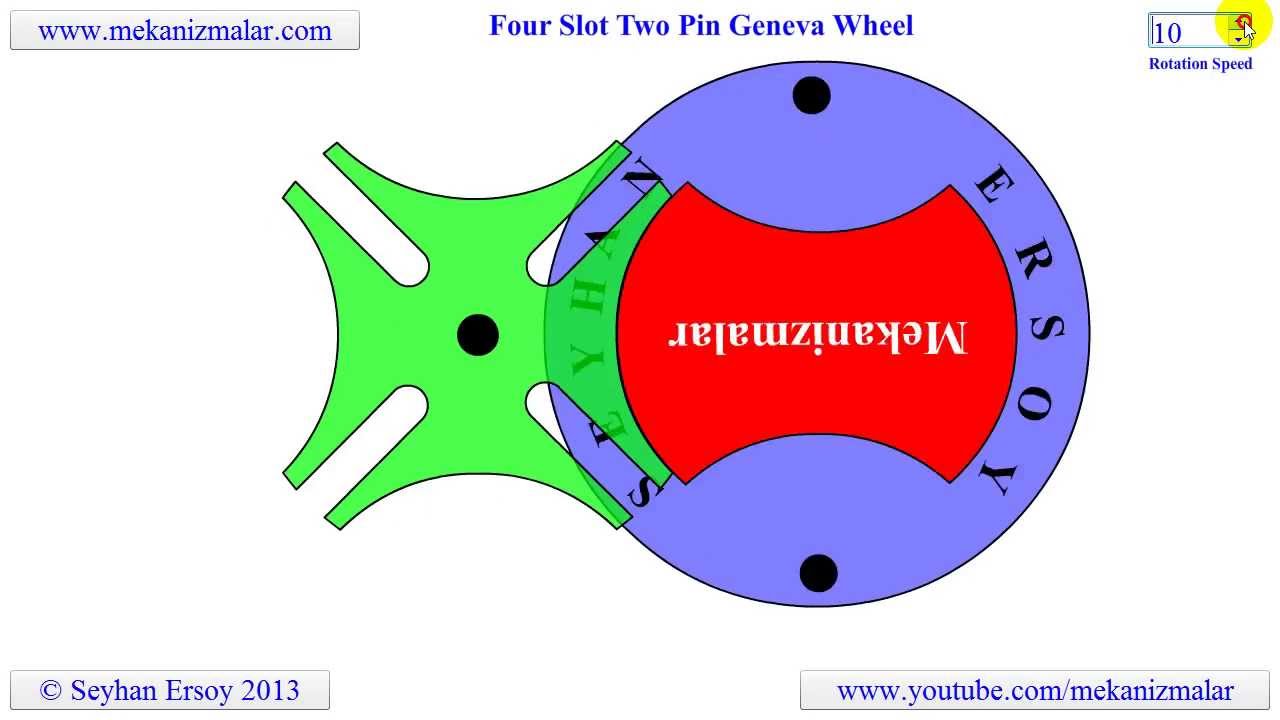
- He discovered that one of the gears at the back of the Mechanism, mounted on this large 223-tooth gear, had a pin in it. MICHAEL WRIGHT: This is the pin and slot mechanism. There's a wheel in the.
- Mar 19, 2017 - This Pin was discovered by Javier Andrich Ferrer. Discover (and save!) your own Pins on Pinterest.
Got It!
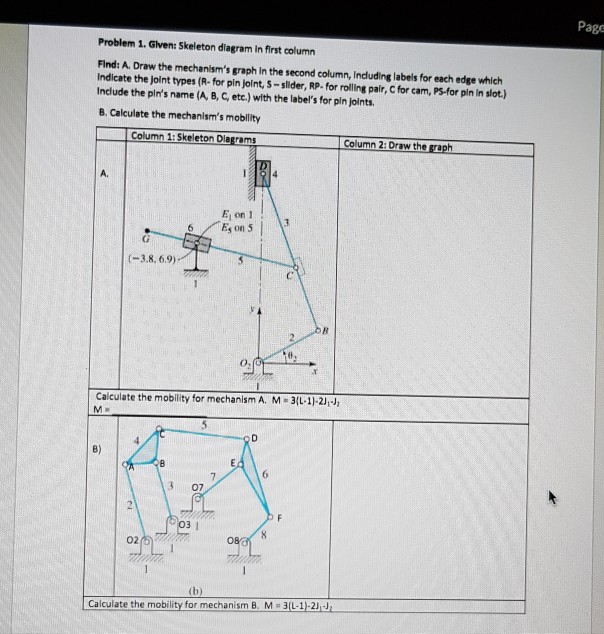
Explanation: Guide A Starts From Rest With Pin P At The Lowest Point In The Circular Slot, And Accelerates Upward At A Constant Rate Until It Reaches A Speed Of 175 Mm/s At The ... In the design of a timing mechanism, the motion of pin P in the fixed circular slot is controlled by the guide A, which is being elevated by its lead screw.
The question describes a push-push type connector (aka push-latch push-release etc). Different manufacturers implement different mechanical designs but the basic idea is always the same.

The Scotch Yoke (also known as slotted link mechanism[1]) is a reciprocating motion mechanism, converting the linear motion of a slider into rotational motion, or vice versa. The piston or other reciprocating part is directly coupled to a sliding yoke with a slot that engages a pin on the rotating part. The location of the piston versus time is simple harmonic motion, i.e., a sine wave having constant amplitude and constant frequency, given a constant rotational speed.
Applications[edit]
This setup is most commonly used in control valve actuators in high-pressure oil and gas pipelines.
Although not a common metalworking machine nowadays, crude shapers can use Scotch yokes. Almost all those use a Whitworth linkage, which gives a slow speed forward cutting stroke and a faster return.
It has been used in various internal combustion engines, such as the Bourke engine, SyTech engine,[2] and many hot air engines and steam engines.
The term scotch yoke continues to be used when the slot in the yoke is shorter than the diameter of the circle made by the crank pin. For example, the side rods of a locomotive may have scotch yokes to permit vertical motion of intermediate driving axles.[3][4]
What is essentially a Scotch yoke, is used in the Tide-Predicting Machine No. 2 to generate a sinusoidal motion(Sine functions).
Internal combustion engine uses[edit]
Under ideal engineering conditions, force is applied directly in the line of travel of the assembly. The sinusoidal motion, cosinusoidal velocity, and sinusoidal acceleration (assuming constant angular velocity) result in smoother operation. The higher percentage of time spent at top dead centre (dwell) improves theoretical engine efficiency of constant volume combustion cycles.[5] It allows the elimination of joints typically served by a wrist pin, and near elimination of piston skirts and cylinder scuffing, as side loading of piston due to sine of connecting rod angle is mitigated. The longer the distance between the piston and the yoke, the less wear that occurs, but greater the inertia, making such increases in the piston rod length realistically only suitable for lower RPM (but higher torque) applications.[6][7]
The Scotch yoke is not used in most internal combustion engines because of the rapid wear of the slot in the yoke caused by sliding friction and high contact pressures[citation needed]. This is mitigated by a sliding block between the crank and the slot in the piston rod. Also, increased heat loss during combustion due to extended dwell at top dead centre offsets any constant volume combustion improvements in real engines.[5] In an engine application, less percent of the time is spent at bottom dead centre when compared to a conventional piston and crankshaft mechanism, which reduces blowdown time for two-stroke engines. Experiments have shown that extended dwell time does not work well with constant volume combustion Otto cycle engines.[5] Gains might be more apparent in Otto cycle engines using a stratified direct injection (diesel or similar) cycle to reduce heat losses.[8]
Modifications[edit]
An improved Scotch yoke, with a means of absorbing sideways thrust, was patented in 1978 by William L. Carlson, Jr., US patent 4075898.[9]

Mechanism Pin Slot Connector
References[edit]
Pin In Slot Mechanism
- ^'ME 700 Mechanisms EdLabQuip'.
- ^'The SyTech Scotch Yoke Engine'. AutoSpeed. Retrieved 2008-07-08.
- ^General Construction, Baldwin Gasoline Industrial Locomotives Baldwin Locomotive Works Record, No. 74, 1913; pages 7-9. The use of the scotch yoke is explained page 8.
- ^Norman W. Storer, Electric Locomotive, U.S. Patent 991,038, granted May 2, 1911. The use of the scotch yoke is discussed on page 2 of the text.
- ^ abc'Science Links Japan Effect of Piston Speed around Top Dead Centre on Thermal Efficiency'. Sciencelinks.jp. 2009-03-18. Archived from the original on 2012-01-27. Retrieved 2011-12-06.
- ^Bourke Engine Documentary, Published 1968, p50, 'Appraising Engine Efficiency' para2
- ^Bourke Engine Documentary, Published 1968, p51, 'Important Factors in Engine Design'
- ^'Effect of the Ratio Between Connecting-rod Length and Crank Radius on Thermal Efficiency'. Science Links Japan. Archived from the original on 2008-01-28. Retrieved 2008-07-08.
- ^'Patent US4075898 - Scotch yoke - Google Patents'. Retrieved 2013-01-21.
Mechanism Pin Slot Machine
External links[edit]
| Wikimedia Commons has media related to Scotch yokes. |
Antikythera Mechanism Pin And Slot
- 'Comparing Simple Crank/Slider and Scotch Yoke Mechanisms' by Fred Klingener, The Wolfram Demonstrations Project; Active demo.